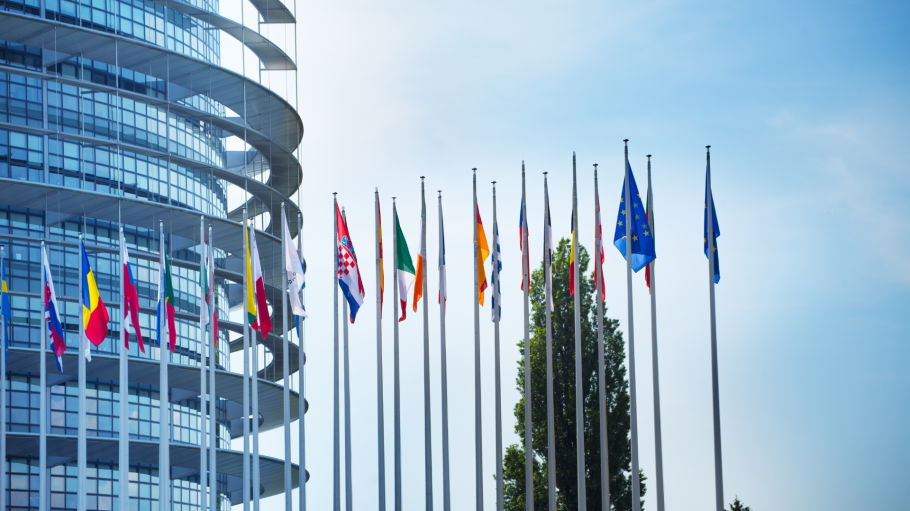
PRESS RELEASE » CBAM: MEPs must close loopholes to drive low-carbon steel production in Europe
CBAM: MEPs must close loopholes to drive low-carbon steel production in Europe
Recent updates
Ahead of today’s European Parliament vote on the Carbon Border Adjustment Mechanism (CBAM), Europe’s steel industry is calling on MEPs to close remaining loopholes and secure a level playing field for European steelmakers investing billions in low-carbon production.
Ahead of today’s European Parliament vote on the Carbon Border Adjustment Mechanism (CBAM), Europe’s steel industry is calling on MEPs to close remaining loopholes and secure a level playing field for European steelmakers investing billions in low-carbon production.
The EU’s CBAM, which entered its definitive phase in January this year, is designed to ensure imported steel faces comparable carbon costs paid by European producers. But a major gap remains: many imported products made from steel are still not covered. This means foreign producers can avoid CBAM costs by turning steel into finished products before exporting them to Europe, shifting production and emissions outside the EU rather than reducing them. EUROFER therefore supports an amendment by the European Parliament’s Industry Committee (ITRE) to extend CBAM to additional steel-intensive products.
Axel Eggert, Director General of the European Steel Association (EUROFER), said: “Europe’s steelmakers are investing billions to produce cleaner steel, but they cannot make that transition without a level playing field. MEPs have the opportunity to strengthen CBAM so that investing in low-carbon steel production in Europe makes economic sense. Europe should be creating the conditions to produce more clean steel here, not incentives to move production elsewhere.”
Getting this right is critical as Europe’s steel industry is investing billions of euros to transform how steel is made and dramatically reduce carbon emissions, while facing rising carbon costs. If CBAM can be circumvented by importing steel contained in finished or more processed products, it will weaken demand for European steel and undermine the business case for those investments.
Extending CBAM to more steel-intensive products would help ensure that steel produced in Europe and steel contained in imported products compete under comparable carbon conditions. A stronger CBAM can therefore help turn Europe’s climate ambition into industrial investment supporting the production of more low-carbon steel in Europe rather than shifting production and emissions elsewhere.
Beyond the extension to steel-intensive products, MEPs will also vote on several other potential changes important for European steel. EUROFER is also backing two further amendments that were included in the Parliament’s ITRE Committee’s opinion. One would ensure that the significant emissions linked to ferro-nickel and nickel pig iron used in imported stainless steel are properly counted under the CBAM recognising the lower-carbon advantage of Europe’s largely scrap-based stainless steel production. The other would close a loophole allowing imported steel to avoid CBAM costs when brought into Europe for processing and then re-exported.
Contact
David French, Spokesperson and Head of Communications, +32 2 738 79 35, (d.french@eurofer.eu)
About the European Steel Association (EUROFER)
EUROFER AISBL is located in Brussels and was founded in 1976. It represents the entirety of steel production in the European Union. EUROFER members are steel companies and national steel federations throughout the EU. The major steel companies and national steel federation of Turkey, Ukraine and the United Kingdom are associate members.
The European Steel Association is recorded in the EU transparency register: 93038071152-83.
About the European steel industry
The European steel industry is a world leader in innovation and environmental sustainability. It has a turnover of around €215 billion and directly employs around 298,000 highly-skilled people, producing on average 146 million tonnes of steel per year. More than 500 steel production sites across 22 EU Member States provide direct and indirect employment to millions more European citizens. Closely integrated with Europe’s manufacturing and construction industries, steel is the backbone for development, growth and employment in Europe.
Steel is the most versatile industrial material in the world. The thousands of different grades and types of steel developed by the industry make the modern world possible. Steel is 100% recyclable and therefore is a fundamental part of the circular economy. As a basic engineering material, steel is also an essential factor in the development and deployment of innovative, CO2-mitigating technologies, improving resource efficiency and fostering sustainable development in Europe.
Steel in Action 2026
Brussels 17 July 2026 - Statement by EUROFER Director General Axel Eggert on the European Commission's proposal to revise the EU Emissions Trading System (ETS):
Steel in Action 2026
The European Steel Association (EUROFER)
172 Avenue de Cortenbergh
1000 Brussels
Belgium
Email: mail@eurofer.eu
Phone: +32 (0) 2 738 79 20